




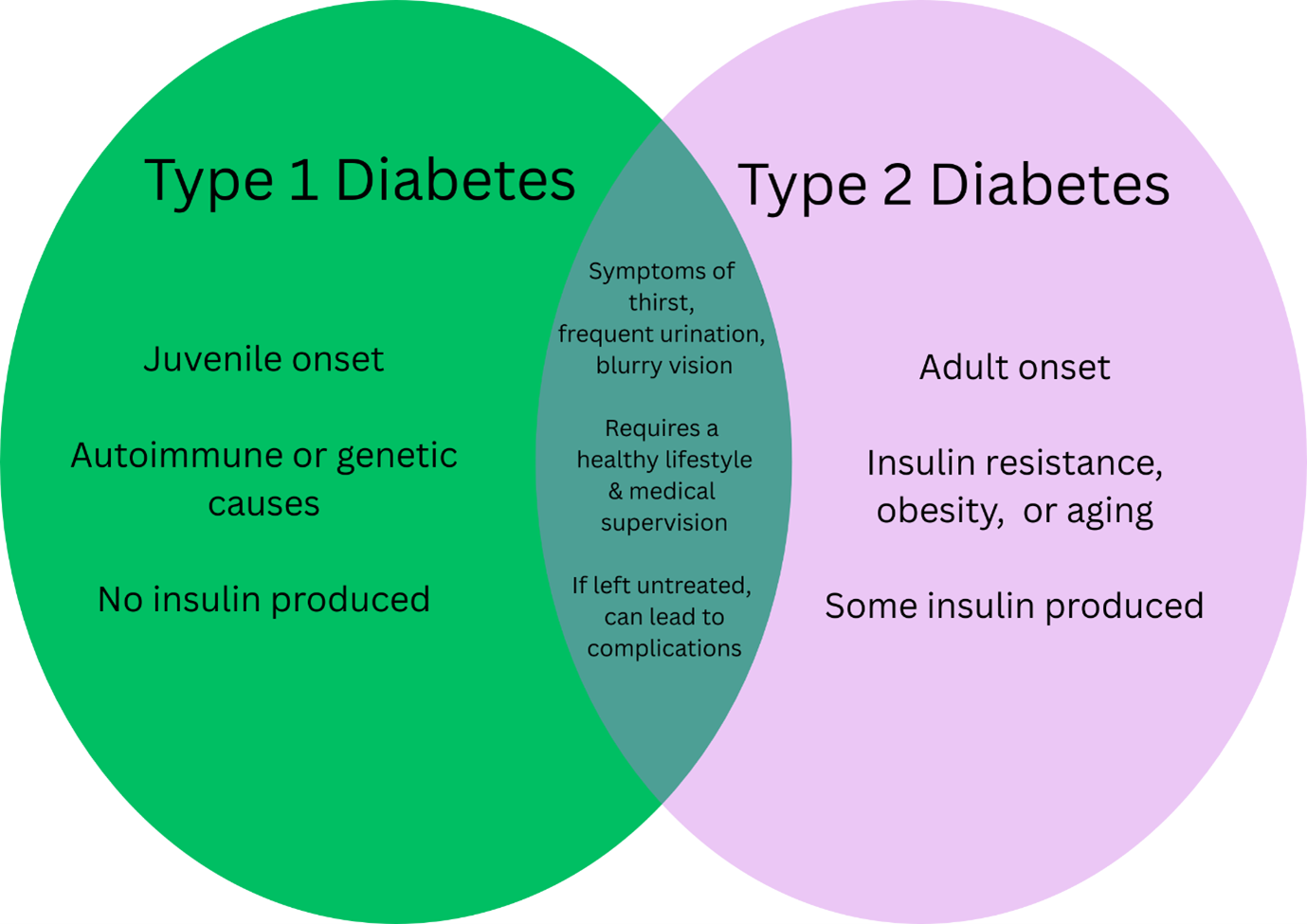
Diabetes is a chronic condition that affects how your body processes sugar (glucose). Since glucose is a vital source of energy, it’s important to understand the differences between Type 1 and Type 2 diabetes for managing it effectively.
What is Diabetes?
According to the International Diabetes Federation (IDF), there are around 589 million adults (20-79 years) with diabetes. What’s more alarming is that this number is expected to rise to 853 million by 2050[1].
Diabetes occurs when your body cannot produce enough insulin or cannot use insulin effectively. Insulin is a hormone the pancreas produces to regulate blood sugar levels. When insulin is not functioning properly, it can lead to high blood sugar levels, which can cause various health problems over time.
Types of Diabetes
There are several types of diabetes, but the two most common are Type 1 and Type 2 diabetes.
- Type 1 Diabetes
Type 1 diabetes is an autoimmune condition where the body’s immune system attacks and destroys the insulin-producing cells in the pancreas[2]. It usually develops in children, teenagers, or young adults. The exact cause is unknown, but genetic factors and environmental triggers (like viruses) may play a role[3].
Common symptoms include:
- Increased thirst
- Frequent urination
- Extreme hunger
- Unexplained weight loss
- Fatigue
- Blurred vision
People with Type 1 diabetes manage their blood sugar levels through insulin injections or insulin pumps. Regular monitoring of blood glucose levels is essential.
- Type 2 Diabetes
On the other hand, Type 2 diabetes is a metabolic disorder. It is characterized by insulin resistance, where the body does not use insulin effectively[4]. It typically develops in adults, but an increasing number of children and adolescents are being diagnosed due to rising obesity rates.
Factors contributing to Type 2 diabetes include:
- Genetics
- Obesity
- Sedentary lifestyle
- Poor diet
- Age
According to the CDC, Type 2 patients often present with increased thirst, frequent urination, increased hunger, fatigue, blurred vision, and slow-healing sores or frequent infections
Type 2 diabetes can often be managed through lifestyle changes, such as:
- Eating a balanced diet
- Regular physical activity
- Maintaining a healthy weight
- Monitoring blood sugar levels
However, in some cases, medication or insulin therapy may be required.
Type 1 Vs Type 2: A comparison
- Age of Onset
Type 1 diabetes usually develops in childhood or adolescence. In contrast, Type 2 diabetes typically occurs in adults, although its prevalence in children is increasing.
- Cause
Type 1 diabetes is caused by the autoimmune destruction of insulin-producing cells. On the other hand, Type 2 diabetes is primarily due to insulin resistance and relative insulin deficiency.
- Treatment
For Type 1 diabetes, insulin therapy is required. Type 2 diabetes can often be managed with lifestyle changes, oral medications, or insulin.
- Prevalence
Type 1 diabetes accounts for about 5–10% of diabetes cases in the USA, while Type 2 diabetes accounts for approximately 90–95% of cases.
Conclusion
While Type 1 diabetes is an autoimmune condition that requires lifelong insulin therapy, Type 2 diabetes can often be managed through lifestyle changes and medication. Understanding the differences helps manage the condition effectively. If you or someone you know is experiencing symptoms of diabetes, it’s essential to consult a healthcare professional for proper diagnosis and treatment.
Key Points
- Approximately 589 million adults worldwide are living with diabetes, with numbers expected to rise significantly in the coming years.
- Diabetes affects how the body processes glucose and can lead to serious health issues if not managed properly.
- Type 1 diabetes is an autoimmune condition that typically develops in younger individuals and accounts for 5-10% of diabetes cases.
- Type 2 diabetes is characterized by insulin resistance and is more prevalent, making up 90-95% of diabetes cases.
- Management strategies differ, with Type 1 requiring insulin therapy and Type 2 often manageable through lifestyle changes and medications.
References
- Home. Diabetes Atlas. May 5, 2025. Accessed May 15, 2025. https://diabetesatlas.org/.
- Understanding type 1 diabetes. Understanding Type 1 Diabetes | ADA. Accessed May 15, 2025. https://diabetes.org/about-diabetes/type-1.
- Type 1 diabetes. Mayo Clinic. March 27, 2024. Accessed May 15, 2025. https://www.mayoclinic.org/diseases-conditions/type-1-diabetes/symptoms-causes/syc-20353011.
- Understanding type 2 diabetes. Understanding Type 2 Diabetes | ADA. Accessed May 15, 2025. https://diabetes.org/about-diabetes/type-2.
- Type 2 diabetes. Centers for Disease Control and Prevention. Accessed May 15, 2025. https://www.cdc.gov/diabetes/about/about-type-2-diabetes.html#:~:text=Overview,adults%20are%20also%20developing%20it.